Pope Leo XIV to Begin First Foreign Trip With Stops in Turkey and Lebanon
The first U.S.-born pope sets out Thursday on a six-day pilgrimage that mixes Christian unity, Middle East tensions and intense media attention.
By Ken Adams ·
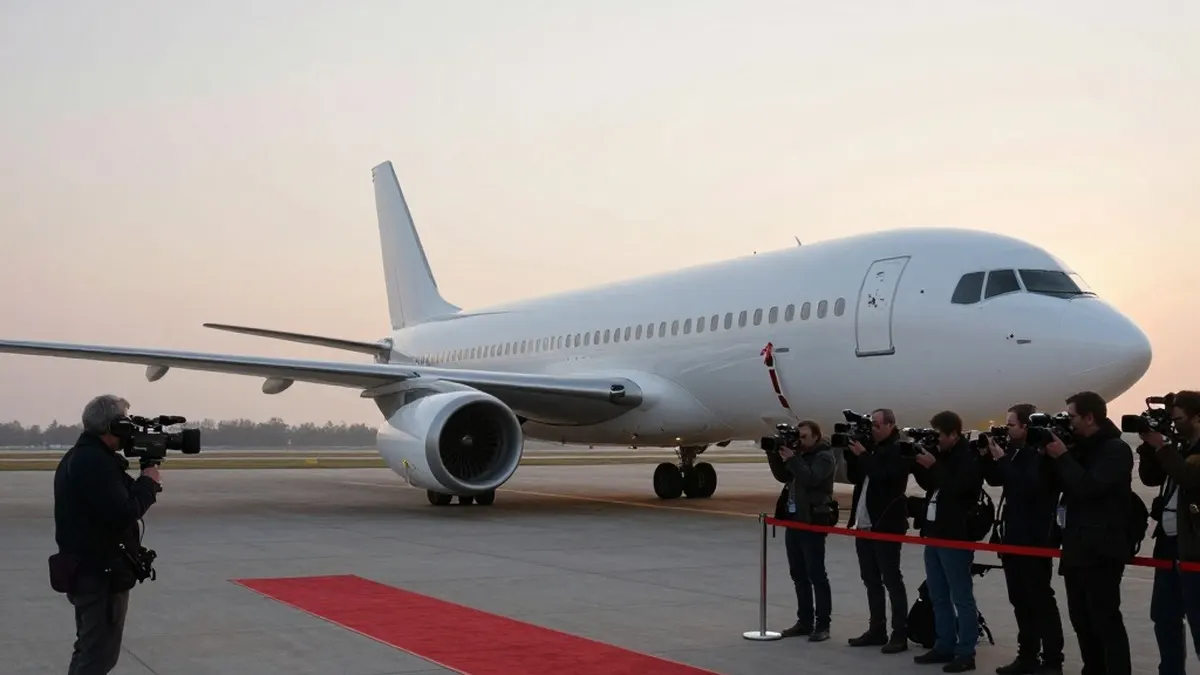
Pope Leo XIV will leave Thursday on his first trip abroad, a visit to Turkey and Lebanon that would be delicate under any circumstances. Regional tensions and the spotlight that follows the first American pope make it more so. The journey runs from Nov. 27 to Dec. 2.
Leo is carrying out a trip that Pope Francis had planned, marking a major anniversary with the Orthodox Church in Turkey. In Lebanon, he intends to back a Christian community that has suffered for a long time, as well as Lebanese of all faiths who still demand justice for the 2020 Beirut port explosion. Leo spent 12 years as head of his Augustinian religious order and two decades as a missionary in Peru. He says he loves to travel, and in recent weeks he has shown diplomatic and linguistic skill answering reporters' impromptu questions.
U.S. media are following the trip closely. ABC, CBS, NBC, Fox, CNN and the BBC all have places in the papal travel group, which covers his speeches, homilies and prayers at a crucial moment in negotiations to end Russia's war in Ukraine and to hold a ceasefire in Gaza. Vatican correspondents and Lebanese and Turkish outlets round out a press corps of about 80, and many more journalists were turned away from the papal plane for lack of space.
"Every time the pope travels, it's a big event," said Natalia Imperatori-Lee, an associate professor of theology at Fordham University in New York. An American pope on his first foreign trip is bigger still, she said, particularly in a crowded U.S. media landscape where Leo has emerged as a kind of counterpoint to President Donald Trump and his crackdown on immigrants. Kim Daniels of Georgetown University's Initiative on Catholic Social Thought and Public Life said the pope's commitment to migration keeps generating coverage, and that the trip should refocus attention on the margins and the vulnerable.
Leo plans to give all his speeches in Turkey in English, and in English and French in Lebanon. That sets aside Italian, the Vatican's usual common language, in favor of languages more people in those countries understand. Attention will also turn to the in-flight news conference on the return to Rome on Dec. 2. Such exchanges produced many of Francis' headline-making lines, beginning in 2013 with his "Who am I to judge?" about a priest said to be gay. Leo has been more cautious and diplomatic, though Imperatori-Lee suggested he might still surprise.
The main reason for the Turkey stop is the 1,700th anniversary of the Council of Nicaea, the first ecumenical council of Christianity. Leo will pray with Ecumenical Patriarch Bartholomew, spiritual leader of the world's Orthodox Christians, at the site of the 325 A.D. gathering, in present-day Iznik, and sign a joint declaration as a visible sign of Christian unity. The Eastern and Western churches were united until the Great Schism of 1054, a split driven largely by disagreement over papal primacy. Bartholomew told the Greek newspaper Kathimerini that a thousand years of division have left a deep wound, but that Christians are obliged to work to heal it.
The visit also gives Leo chances to address regional tensions, Catholic-Muslim relations and the shrinking Christian presence in the Middle East. Clergy in the region say the Vatican's strong support for Palestinians in Gaza, first under Francis and now Leo, has raised the Church's credibility among ordinary Muslims. The Rev. Paolo Pugliese, head of the Capuchin friars in Turkey, said that while many Western powers hesitated, the two popes were firm.
Security is a concern. Israel carried out an airstrike on the Lebanese capital on Sunday that killed Hezbollah's chief of staff and four others. Organizers insisted the pope would be safe. Bishop George Bacouni, the Melkite Greek Catholic archbishop of Beirut, said the strike does not affect where the pope goes. The Vatican said no extra security measures were taken, though spokesman Matteo Bruni declined to say whether Leo's vehicles are bulletproof. Leo will not visit southern Lebanon, which was hit by last year's war between Israel and Hezbollah and has seen heavier Israeli strikes in recent weeks, despite a petition from Christian groups there. Organizers said that at most Israeli drones might fly over Beirut.
The high point in Lebanon comes on Dec. 2, when Leo is due to pray silently at the site of the Aug. 4, 2020, port explosion. The blast killed at least 218 people, injured more than 6,000 and caused billions of dollars in damage after hundreds of tons of ammonium nitrate detonated in a warehouse. It appeared to stem from government negligence, and the investigation has repeatedly stalled, with no official convicted five years later. Many Lebanese hope the pope will press the political class for accountability. Monsignor Cesar Essayan, apostolic vicar of Beirut for Latin-rite Catholics, said such an appeal could shake leaders who do not hear the cry of the poor. Leo will also meet young Lebanese, and Marielle Boutros of the charity Aid to the Church in Need called the visit "a really concrete sign that Lebanon is not forgotten."
Source: Chicago Tribune